
Funded Project
Pelagic Orca Protection Project
Agency funded: Orca Research Trust

This rare sub-type of orca only lives in the open ocean. Moana Mark is supporting research and protection status in Aotearoa New Zealand.
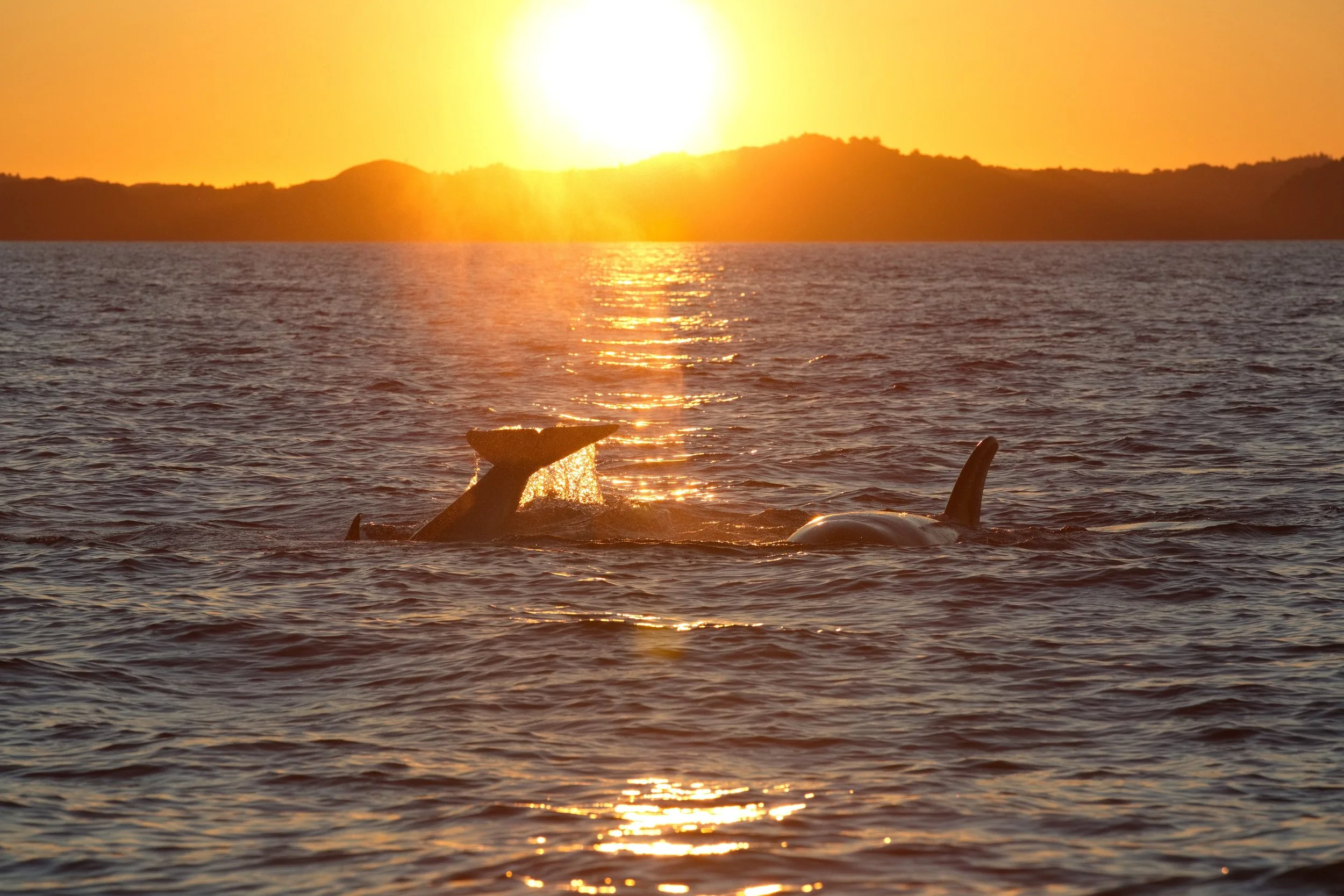
Out of sight, out of mind
Most New Zealanders know of the coastal orca that hunt stingrays in the shallows.
But offshore there is another type of orca entirely. The pelagic orca hunts dolphins and small whales.
Fewer than 40 individuals are known and Kaikōura is one of only three places in Aotearoa New Zealand where they are seen. Yet the law does not recognise this sub-type.
The aim?
Moana Mark is supporting this project to help get the pelagic orca recognised – and protected – in its own right.
Why study pelagic orca?
Fewer than 40 individuals identified, against about 130 coastal orca
Seen at only three sites: the Bay of Islands, the Hauraki Gulf and Kaikōura
Hunts dolphins and whales, where coastal orca mostly hunt rays and sharks
Assessed together with coastal orca by the NZ Government, so its own status is unknown
How is the research carried out?
The Orca Research Trust builds the picture one photograph at a time, drawing on researchers, tour operators and members of the public.
Photo-identification of every individual from fin shape, scars and markings
A national catalogue of NZ pelagic orca, with records going back to 2004
Counting cookie cutter shark bite scars, a tell-tale sign of time spent in warm open ocean
Recording what the orca hunt, from dolphins to false killer whales
You cannot protect what is not recognised. Your support keeps the catalogue growing, gets the science published, and builds the evidence needed for the NZ pelagic orca to be assessed and managed as its own population, with protection matched to how few there are.
How can your support protect them?
What stage is the project at?
The Orca Research Trust has catalogued the NZ pelagic orca since 2004 and presented the case for a separate ecotype in 2020. The next steps involve consolidating the available data to raise the profile of these mysterious orca and having the government assess them as a different population. Eventually, the aim is to gather enough evidence to be able to compile a full scientific description, followed by formal recognition.
Keep adding new sightings and photos to the pelagic orca catalogue
Publish the ongoing data that is collated about the NZ pelagic ecotype
Seek separate assessment under the New Zealand Threat Classification System
Ask for pelagic orca to be managed as a separate population
About Dr Ingrid Visser and Tracy Cooper
Dr Ingrid Visser founded the Orca Research Trust in 1998 and has studied New Zealand's orca for more than 30 years. Tracy Cooper works alongside her on the Trust's photo-identification catalogue and her focus is on the NZ Pelagic orca.
Together they maintain New Zealand's orca catalogues and you can download a copy at www.orcaresearch.org.
Help us bring New Zealand's hidden orca into the light

Ready to support?
Whether you're an individual wanting to give back, or a business ready to lead in sustainable tourism, there's a way to make your mark.
When you donate, select the Pelagic Orca Protection Project so your gift goes directly to identifying and protecting these rarely seen orca.
Donate as an Individual

Donate as a Business
Project Spotlight


